
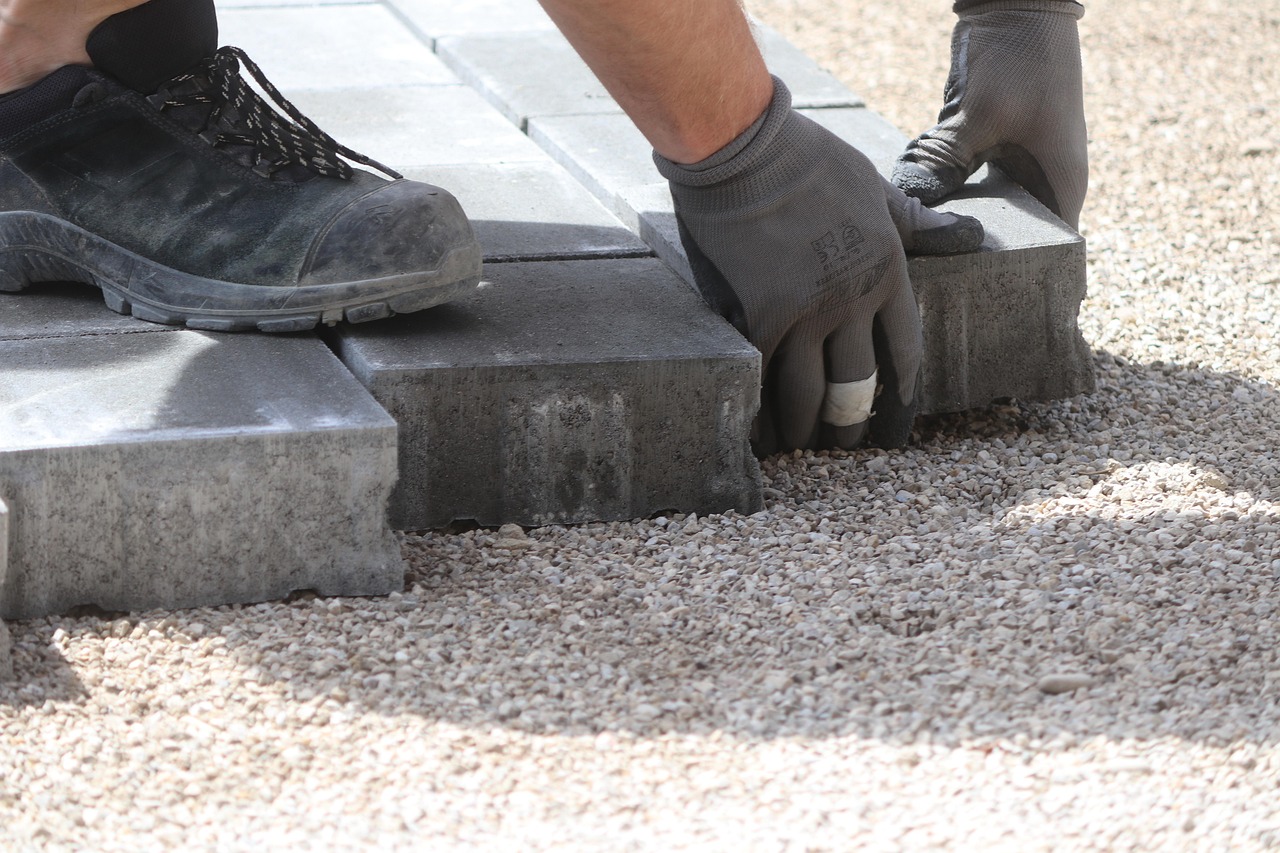
Installing concrete brick pavers or natural travertine around an inground swimming pool directly over expansive red clay leads to sunken coping stones, trip hazards, pooling water, and structural pool deck cracking. Constructing an engineered paver pool deck base Conyers GA homeowners depend on establishes a rock-solid, free-draining foundation that stays level and beautiful across Rockdale County properties.
Located east of Atlanta near the Georgia International Horse Park and the Yellow River basin, Conyers features rolling Piedmont terrain and dense Cecil red clay subsoils. When a swimming pool is excavated and backfilled, the soil surrounding pool bond beams remains loose and unconsolidated for years. Splash water from pool play combined with intense summer thunderstorms causes uncompacted clay to settle unevenly. Pavers installed over inadequate aggregate foundations tilt toward pool edges, dislodging pool coping stones and creating hazardous uneven surfaces under barefoot traffic. Constructing a reinforced aggregate foundation using compacted 3/4″ minus base gravel topped with sharp washed concrete sand creates an unyielding structural platform that directs runoff away from pool edges. Our dedicated Conyers aggregate delivery fleet delivers quarry-direct base stone right to your job site.
Engineering Standards for a Paver Pool Deck Base Conyers GA Codes Require
Pool surrounds endure extreme hydraulic stress, including thousands of gallons of chlorinated or saltwater splash out, intense sun heating cycles, and concentrated foot traffic along pool entries.
Engineering guidelines published by the University of Georgia Extension and national hardscape associations recommend a minimum four-to-six-inch compacted crushed aggregate base beneath pedestrian paver pool surrounds. Building an engineered paver pool deck base Conyers GA building codes accept prevents subgrade liquefaction, bridges settling backfill zones, and maintains a consistent outward slope that drains pool water toward garden swales.
The Four Structural Layers of a Swimming Pool Paver Deck
A durable, non-shifting pool deck installation requires four carefully balanced construction tiers:
- Excavated Subgrade and Geotextile Membrane: Consolidated native earth covered with heavy non-woven geotextile fabric to stop stone loss into underlying clay.
- Compacted Structural Sub-Base: Four to six inches of 3/4″ minus base gravel compacted in two-inch lifts to maximum density.
- Sharp Sand Bedding Layer: Exactly one inch of screeded, uncompacted coarse concrete sand providing uniform seat bedding for each paver unit.
- Perimeter Restraint and Pool Coping: Mortared pool coping units and exterior spiked edge restraints locking pavers against horizontal movement.
Comparing Pool Deck Base and Bedding Aggregates
Evaluating technical properties ensures you select materials that resist washout and maintain stability:
| Paving Aggregate | Particle Profile & Texture | Pool Deck Function |
|---|---|---|
| 3/4″ Minus Base Gravel | Angular crushed limestone with binder fines | Primary structural foundation; compacts into an unyielding monolithic platform |
| Concrete Sand | Coarse, angular washed silica sand | Optimal one-inch bedding layer; drains splash water and locks paver joints |
| Stone Dust | Fine pulverized limestone screenings | Alternative bedding layer; compacts dense under walkway and patio stones |
| Fine Mason Sand | Rounded sand granules | Unsuitable for bedding; shifts underfoot and washes out under heavy pool splashes |
Step-by-Step Construction of Your Pool Paver Base
Achieving a smooth, enduring pool surround requires disciplined excavation and grading:
- Excavate Pool Perimeter: Dig out the deck footprint eight inches deep (four inches of base, one inch of bedding sand, and three inches of paver thickness). Pitch subgrade one-quarter inch per foot away from the pool coping.
- Install Separation Fabric: Roll heavy-duty geotextile fabric over the excavated soil, overlapping seams by eighteen inches to prevent stone migration into native clay.
- Install First Base Lift: Distribute two to three inches of 3/4″ minus base gravel. Moisten lightly with a hose and compact thoroughly with a vibratory plate compactor.
- Install Second Base Lift: Add remaining base gravel to achieve a full four-to-six-inch compacted thickness. Re-compact until the stone rings hard under the plate.
- Screed Bedding Sand: Place one-inch screed rails and spread coarse concrete sand. Pull a straight screed board across the rails to form a perfectly smooth bedding plane.
Hardscape installers in western Georgia communities such as Villa Rica follow this exact aggregate base layering to keep paver pool decks level across clay terrain.
Certified Pool Deck Aggregates Delivered Locally
We supply clean, quarry-direct aggregates that meet all municipal paving specifications:
- 3/4″ minus base gravel → Crushed angular limestone containing mineral fines that compacts into an unyielding, rut-free pool deck base.
- Concrete sand → Coarse washed angular sand meeting ASTM C33 specs for professional paver bedding layers.
- Stone dust → Screened limestone fines used for tight paver jointing, walkway bedding, and minor grade leveling.
Explore bedding thicknesses, sand screeding tools, and joint stabilization methods in our comprehensive guide to concrete sand before laying your pavers.
Calculating Pool Deck Base and Sand Tonnage
Accurate material calculations eliminate project downtime and prevent costly over-ordering:
Cubic Yards Formula: Length (ft) × Width (ft) × Depth (ft) ÷ 27 = Cubic Yards
Tonnage Formula: Cubic Yards × Density Factor = Tons Required (1.40 for 3/4″ Minus, 1.35 for Concrete Sand)
For example, installing a paver pool deck surrounding a pool measuring 550 square feet of finished deck surface with a 5-inch (0.417 ft) base and a 1-inch (0.083 ft) bedding sand layer:
Base Layer: 550 sq ft × 0.417 ft = 229.35 cubic feet ÷ 27 = 8.49 cubic yards.
8.49 cubic yards × 1.40 = 11.89 tons of 3/4″ minus base gravel.
Bedding Layer: 550 sq ft × 0.083 ft = 45.65 cubic feet ÷ 27 = 1.69 cubic yards.
1.69 cubic yards × 1.35 = 2.28 tons of concrete sand.
Ordering 12.5 tons of base gravel and 2.5 tons of concrete sand covers the entire deck area with surplus for joint sweeping. Installing the proper paver pool deck base Conyers GA homeowners trust guarantees your pool surround remains level and safe for barefoot entertainment. Contact our order desk to schedule your bulk paver base delivery in Conyers today.
Frequently Asked Questions About Paver Pool Decks
Can pavers be placed directly on pool backfill soil?
No. Uncompacted backfill dirt settles for up to seven years. Placing pavers directly over unreinforced dirt causes dramatic dipping, cracked coping, and dangerous trip edges.
What slope should a pool paver deck have?
A pool deck should slope away from the water edge at a rate of one-quarter inch per foot to shed splash water, suntan oils, and rainfall into landscape beds or deck channel drains.
Why is concrete sand preferred over mason sand under pool pavers?
Concrete sand has angular grains that lock together under compaction and resist erosion from chlorinated pool splashes, whereas rounded mason sand washes out easily.
Does geotextile fabric prevent weeds from growing in pool deck joints?
Geotextile fabric stops weeds from emerging through subgrade soil and prevents base stone from sinking into clay. Surface weeds can be minimized by using polymeric joint sand.
Order Bulk Pool Deck Aggregates in Conyers, GA
Transform your backyard pool into an outdoor retreat with certified crushed stone and clean bedding sand delivered directly to your job site. Serving all Conyers communities, from properties along Salem Road and Sigman Road to neighborhoods near Olde Town Conyers, our drivers ensure prompt delivery. Call our experienced Conyers aggregate supply desk today to book your order.











