




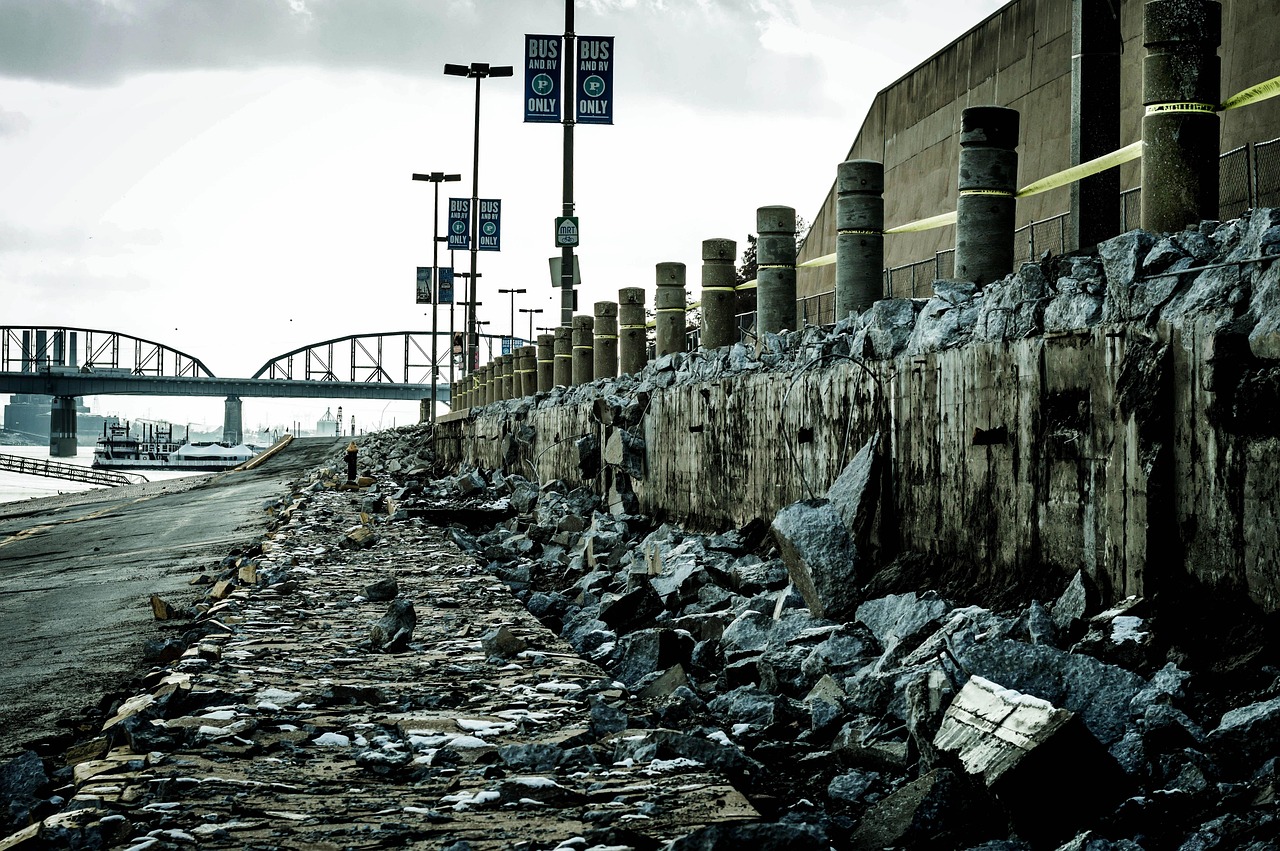
Rock Island sits at the confluence of the Mississippi River and the Rock River in western Illinois, occupying a landscape of waterfront bluffs and historic neighborhoods. From residences near Sunset Marina to homes bordering Black Hawk State Historic Site along Blackhawk Road, living near the river provides spectacular scenery. However, this riverfront geography also exposes properties to shoreline scouring, bluff slumping, and gullying during wet seasons. Implementing engineered erosion control Rock Island IL property owners can count on protects vulnerable slopes and safeguards foundations. To view heavy-duty riprap aggregates dispatched across the Quad Cities, visit our Rock Island gravel delivery page.
When high river crests coincide with saturated soils, water velocity strips unprotected dirt from slopes, undermining trees and destabilizing terraces. Holding a steep river bluff using turf or loose mulch is ineffective against rushing water. This guide details how to grade slopes to safe angles, install heavy non-woven geotextile underlayment, anchor slopes with heavy #4 stone riprap, and construct permeable stone drainage swales that dissipate hydraulic energy.
For municipal floodplain regulations and residential shoreline protection standards in Rock Island County, consult:
City of Rock Island Public Works and Engineering Division (Source)
Why River Bluff Geology Demands Heavy Erosion Control Rock Island IL Solutions
The bluffs framing Rock Island were carved out by glacial meltwaters, leaving steep terraces composed of wind-blown loess silt and alluvial sand resting over limestone bedrock. While loess stands relatively well when dry, it liquefies rapidly when saturated. During wet springs, sheet runoff pours off driveways and roofs, cutting deep gullies down exposed hillside banks.
Simultaneously, seasonal flood stages along the Mississippi and Rock rivers generate wave action that scours the toe of shoreline bluffs. Once the base is eroded away, upper soil slumps down in rotational landslides. Halting this destructive cycle requires establishing a layered armor system: placing geotextile fabric to hold silt in place, backfilling clean gravel for drainage, and locking heavy angular riprap stones together to withstand current shear forces.
- Intermediate filter blanket and drainage swale lining → 1 1/2″ clean rock
- Heavy angular slope armoring and shoreline riprap → #4 crushed stone
- Overland swale borders and naturalized dry creek beds → river rock
- Deep toe stabilization for severe bluff slopes → coarse quarry breaker ballast
Browse erosion control materials available in Rock Island
Best Materials for Rock Island Riverfront Stabilization
| Armor layer | Recommended material | Why it works |
|---|---|---|
| Primary slope armor | #4 crushed stone | Heavy two-to-three-inch angular rock pieces key together to resist wave action and high water velocity |
| Bedding filter layer | 1 1/2″ clean rock | Void spaces cushion underlying geotextile and dissipate hydraulic pressure behind surface riprap |
| Swale channel lining | River rock | Smooth rounded cobbles carry surface runoff down slopes without scouring soil beneath |
| Underlayment barrier | Heavy geotextile | Porous polypropylene fabric holds fine loess silt in place while allowing groundwater to escape freely |
Stacking heavy crushed rock over a porous geotextile cushion stops soil particles from migrating outward while allowing subterranean groundwater to bleed off harmlessly.
Step 1: Grade the Bluff and Anchor the Slope Toe
Before placing stone, assess slope stability. Pull steep vertical drop-offs back to a stable slope ratio of two-to-one (two feet horizontal for every one foot vertical). At the bottom where water meets the bank, excavate a trench two feet deep and three feet wide to create a toe keyway. This underground trench anchors the entire revetment, preventing stone placed on the hillside from sliding into the riverbed. Tamp the bank smooth.
Step 2: Install Heavy-Duty Geotextile and Bedding Rock
Never dump heavy riprap directly onto bare loess silt; rushing water pulls fine soil through rock voids, collapsing banks from within. Line the bank with non-woven geotextile fabric, anchoring the top edge in an eighteen-inch trench dug along the crest. Over the fabric, spread four inches of 1 1/2″ clean rock. This aggregate cushions fabric against puncture and provides a drainage bed for groundwater. Our 1 1/2″ clean rock guide covers gradation standards and bedding depths.
Riverfront property owners managing steep bluffs upriver in East Moline utilize this exact fabric and gravel underlayment to stabilize bluff properties against seasonal flooding.
Step 3: Armor the Face with Heavy #4 Crushed Stone
Place six to eight inches of #4 crushed stone over the 1 1/2″ bedding layer, working from the bottom toe trench upward toward the slope crest. The angular, fractured edges of the heavy stone lock together into a cohesive blanket that stays locked against wave action and floating debris. For surface swales routing roof drainage down the hill, line the channel with heavy river rock to create an attractive, naturalized cascade that directs water safely into the river basin.
Benefits of Local Delivery for Rock Island Projects
- Heavy tandem dump trucks haul high-tonnage riprap loads directly to staging pads near river banks
- Direct quarry sourcing delivers hard, dense limestone aggregates that will not crumble under water pressure
- Substantial cost savings per ton when ordering full truckloads for large shoreline restoration projects
- Scheduled dispatch lets you coordinate machine placement with licensed marine excavator operators
How Much Riprap Will Your Shoreline Project Require?
Calculating the bulk aggregate volume needed for slope stabilization relies on the cubic yardage formula: slope length in feet multiplied by width in feet multiplied by stone depth in inches, divided by 324. To convert cubic yards to tons, multiply by 1.4, as crushed limestone riprap weighs approximately 2,800 pounds per cubic yard.
For example, if you are armoring a 60-foot section of riverbank that extends 10 feet up the slope with a 6-inch layer of #4 crushed stone riprap, multiply 60 by 10 by 6 to get 3,600. Divide 3,600 by 324 to find that you need 11.11 cubic yards. Multiply 11.11 by 1.4 to calculate 15.56 tons of rock. Ordering 17 tons covers bedding in the bottom toe keyway and filling irregular bank contours.
FAQ
Can I use smooth river rock as shoreline riprap?
Smooth river rock lacks angular locking edges and rolls in fast currents. Always use jagged, crushed rock like #4 stone for wave protection.
Do I need federal or state permits to work along the river?
Work below the ordinary high water mark of the Mississippi requires permits from the US Army Corps of Engineers and Illinois DNR. Upper bluff work typically requires city permits.
Why is non-woven geotextile better than woven fabric for slopes?
Non-woven fabric has three-dimensional porosity that lets groundwater seep through quickly without building hydrostatic pressure, while trapping fine silt.
How do I maintain my rock riprap slope over time?
Inspect the revetment annually after spring floodwaters recede. Replace displaced stones and remove woody brush that could dislodge aggregate as roots grow.
Final Thoughts
Implementing a permanent erosion control Rock Island IL revetment system protects your valuable riverfront real estate, halts dangerous slope slumping, and safeguards home foundations from high-water damage. By combining a solid toe trench, durable non-woven geotextile, and thick interlocking layers of #4 crushed stone and clean rock bedding, your riverbank will remain stable through decades of Mississippi River floods and intense Midwestern storms. Review aggregate options across the Quad Cities on our Illinois service area page.











