
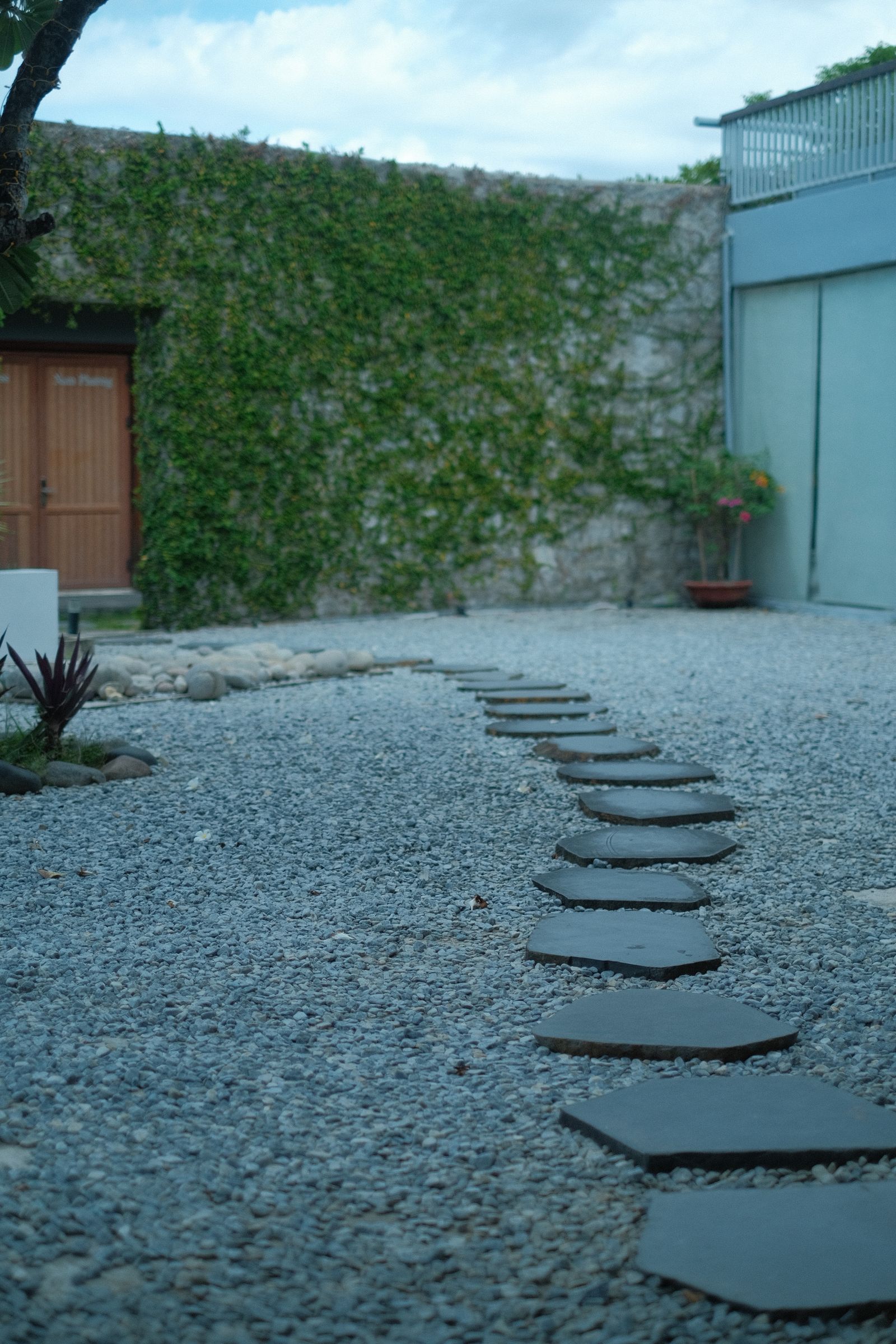
Leawood homes along Tomahawk Creek and the estate neighborhoods off Mission Road tend to have generous yards, mature trees and carefully planted beds. A well-built garden path ties all of that together. It gives guests a clear route from the driveway to the back patio, keeps foot traffic off the lawn, and frames the plantings around it. Choosing the right garden path stone in Leawood, KS comes down to two things: how the path feels underfoot and how well it handles Johnson County clay. You can find every material mentioned here on our Leawood delivery page.
This guide covers path materials, borders, and the base that keeps a path level for years.
For background on how garden paths are planned and built, see:
Footpath (Wikipedia)
Why Path Materials Matter in Leawood
Johnson County soil is heavy clay in many neighborhoods. It holds water after a storm, swells when wet and shrinks during dry spells. A path laid straight onto that soil will heave, sink in spots and grow weeds along every seam. In winter, the area’s 36-inch frost depth means repeated freeze-thaw cycles that loosen any path without a drained base.
The fix is simple: a compacted base that drains, a surface stone that suits the look you want, and a firm edge that keeps everything in place.
- Formal paths → walkway gravel
- Path base and setting bed → stone dust
- Bed borders and accents → river rock
- Soft, casual walks → pea gravel
Browse landscaping stone available in Leawood
Choosing Garden Path Stone for a Leawood Yard
| Path style | Recommended material | Why it works |
|---|---|---|
| Formal front walk | Walkway gravel | Small crushed stone packs firm and looks crisp beside lawn |
| Flagstone or stepping-stone path | Stone dust | Fine base you can level and tamp under each stone |
| Bed borders and dry edges | River rock | Smooth stone frames plantings and slows splash erosion |
| Side-yard or garden-room path | Pea gravel | Comfortable underfoot with a relaxed, cottage look |
Building the Base
Lay out the path with string or a garden hose and aim for at least 36 inches wide so two people can pass. Dig out four to five inches of soil. Lay a woven landscape fabric over the clay, then spread two to three inches of compacted base. Under walkway gravel or flagstone, stone dust works well because it tamps flat and firm. Slope the path very slightly to one side so rainwater runs off rather than pooling in the middle.
Laying the Surface
For a gravel path, spread about two inches of walkway gravel over the compacted base and tamp it. The small angular stones lock together, so the path stays firm and does not scatter onto the lawn. For flagstone, set each stone into an inch of loose stone dust, tap it level with a rubber mallet, then sweep more stone dust into the joints. Our walkway gravel guide compares sizes and colors if you are matching an existing path.
Borders That Hold Everything in Place
Edging is what keeps an upscale path looking upscale. Steel, aluminum or set stone edging stops gravel from migrating into beds and turf. Along planting beds, a band of river rock between the path and the mulch creates a clean transition and catches rain that drips off the roofline. In shady spots under mature trees, river rock also holds up better than mulch, which breaks down and washes onto the path. Homes in nearby Prairie Village use the same approach on their older, tree-filled lots.
Benefits of Local Delivery for Leawood Landscaping
- Path stone, base material and border rock in a single trip
- Drop locations chosen to protect lawns and irrigation heads
- Consistent color from one load, so the path matches end to end
- Easy reorders when you extend the path later
How Much Stone Do You Need?
Path math is quick. Take the square footage of the path (length times width), multiply it by the layer thickness in inches, then divide that number by 324 and you have cubic yards. A 40-foot path that is 3 feet wide needs about 0.74 cubic yards for a 2-inch base and the same again for a 2-inch surface. Round up to the nearest half yard, since a little extra is handy for touch-ups after the first winter.
Planting and Lighting Along the Path
Once the path is down, the plantings beside it finish the look. Low, tidy plants such as boxwood, catmint or ornamental grasses keep sight lines open without spilling onto the stone. Leave a few inches between the planting and the edge so leaves do not drop straight onto the gravel. If you plan to add low-voltage path lights, run the cable alongside the path before you lay the surface stone, so you are not digging up a finished path later. Space fixtures every eight to ten feet and stagger them from side to side for even light. On a sloped front yard, a few broad steps of flagstone set in stone dust can break up a long path and make it easier to walk in wet weather.
FAQ
What is the best stone for a garden path in Leawood?
Walkway gravel gives the cleanest, firmest finish. Pea gravel is softer underfoot but moves more, so it needs sturdy edging.
Will a gravel path work under big shade trees?
Yes. Gravel paths drain well, do not compete with roots for water and are easier to rake clean of leaves than mulch.
How do I stop weeds coming through the path?
Landscape fabric under the base and a compacted surface prevent most weeds. Rake the path a few times a season to disturb seeds that land on top.
Can I walk on a new stone dust base right away?
Yes, once it is tamped. Lightly misting it with water before the final tamp helps it set harder.
Final Thoughts
The best garden paths in Leawood look simple but are built carefully: a drained base, a surface stone chosen for the look and feel you want, and an edge that keeps everything in its place. Get those three right and the path will look sharp for many seasons. Planning work in other Johnson County towns? See every Kansas city we deliver to.











