
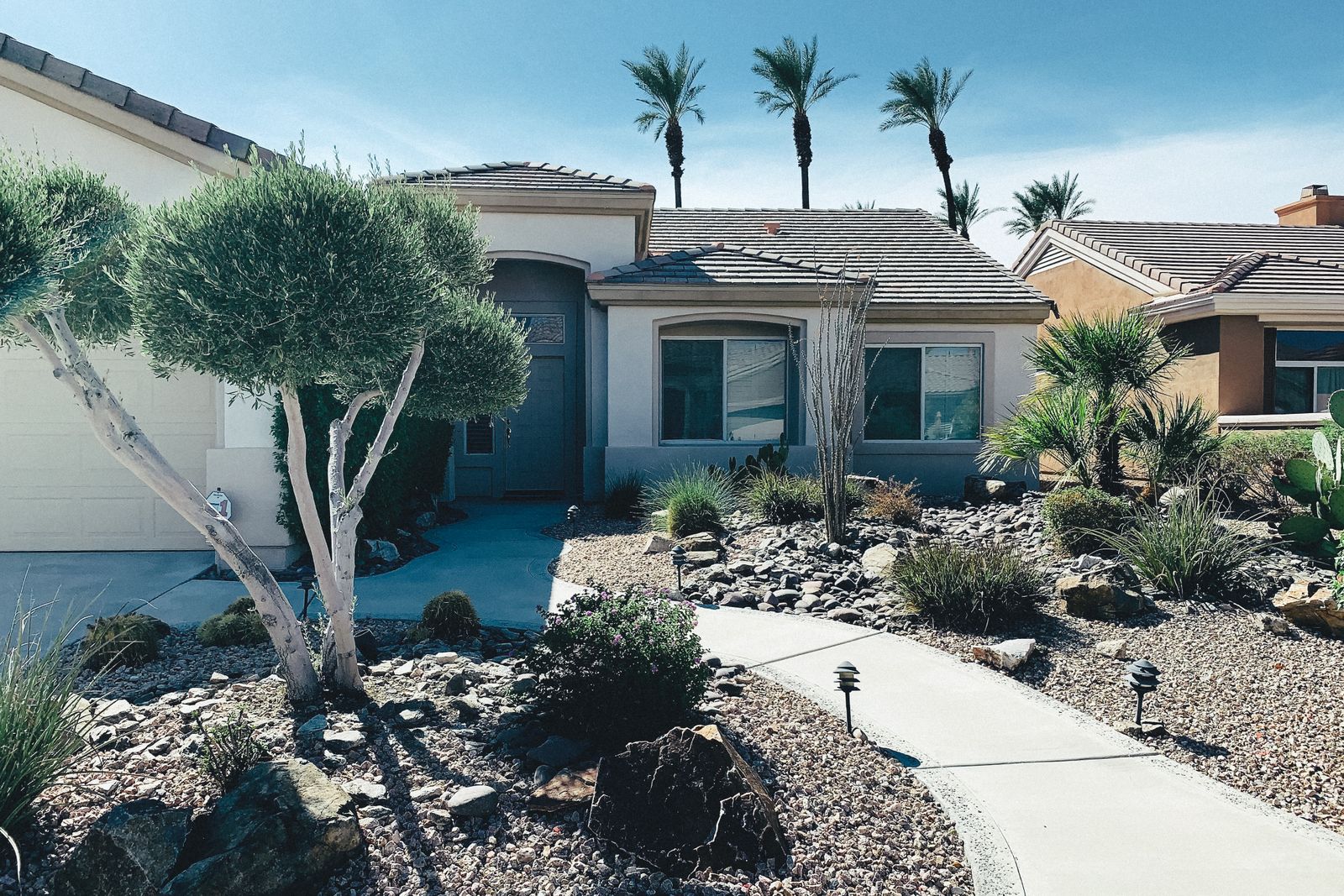
Junction City is home to many military families and rental properties tied to nearby Fort Riley. When a move can come with a few months’ notice, nobody wants a yard that needs hours of mowing, watering and weeding every week. A low-maintenance yard in Junction City, KS should look tidy all year, survive hot, windy summers and still be easy to hand over to the next family. Everything below is available on our Junction City delivery page.
This guide shows how to swap high-upkeep lawn and bare dirt for stone and mulch areas that take care of themselves.
For the principles behind water-wise landscaping, see:
Xeriscaping (Wikipedia)
Why Low-Maintenance Landscaping Fits Junction City
Junction City sits where the Republican and Smoky Hill rivers meet to form the Kansas River. Summers bring heat and strong wind, and dry spells can stretch for weeks. Thin turf on small lots browns quickly, while bare patches turn to mud in spring storms. For homeowners and landlords alike, every square foot of lawn that does not need mowing or watering is time and money saved.
Stone and mulch areas fix most of these problems at once: they hold the soil, shed water and stay neat with a quick rake.
- Side yards and play corners → pea gravel
- Foundation strips → river rock
- Shrub beds → bark mulch
- Paths and parking edges → stone dust or walkway gravel
Browse landscape materials available in Junction City
Low-Maintenance Materials for Junction City Yards
| Area | Recommended material | Why it works |
|---|---|---|
| Narrow side yards | Pea gravel | No mowing, drains fast and is comfortable to walk on |
| Along the foundation | River rock | Heavy enough to stay put in wind and stops splash erosion |
| Shrub and perennial beds | Bark mulch | Shades the soil, saves water and blocks weeds |
| Sitting area or grill spot | Stone dust | Tamps firm and level for chairs and a grill |
Replace Problem Lawn First
Start with the spots that cause the most work: narrow strips between houses, shady corners where grass will not grow, and the patch by the back door that always turns to mud. Remove the sod, lay landscape fabric, and add two to three inches of pea gravel inside a steel or plastic edge. These areas stop needing mowing the day you finish them.
Use Rock Where the Wind and Water Hit
Kansas wind can scatter light materials, so put heavier stone where it is most exposed. River rock along the foundation and under downspouts holds its place in a storm and keeps water from digging holes beside the house. Our river rock guide covers the sizes that work best for borders and drainage spots.
Mulch Beds That Mostly Look After Themselves
Group a few tough shrubs or native grasses into a bed rather than scattering plants across the lawn. Cover the bed with three inches of bark mulch. The mulch keeps roots cool, holds moisture through dry spells and smothers most weeds. A fresh inch each spring is usually all it needs. Homeowners in nearby Grandview Plaza and Ogden use the same layout for rentals and starter homes.
Benefits of Local Delivery in Junction City
- Gravel, rock and mulch delivered together for one weekend project
- Bulk material costs less than dozens of bags
- Quick turnaround before a move-in or move-out date
- Easy reorders when you expand the stone areas later
How Much Material Do You Need?
For each gravel or mulch area, find the square footage, multiply it by the planned depth in inches and divide by 324. The answer is in cubic yards. A 6-foot by 40-foot side yard covered with 2 inches of pea gravel takes about 1.5 cubic yards. A 100-square-foot shrub bed mulched 3 inches deep takes just under 1 cubic yard.
Handing the Yard Over at Move-Out
If you are on orders or managing a rental, a stone-and-mulch yard makes turnover simple. A week before the move, rake the gravel areas level, pull any weeds that have crept through, and add a fresh inch of mulch to the beds. That small refresh makes the property look cared for in listing photos and at the walk-through. Landlords can also write a short note for the next tenant explaining which areas are gravel, which are beds, and that neither needs watering. With no lawn to neglect over a long deployment or an empty month between leases, the yard will look much the same when the next family arrives as it did when the last one left.
Picking Plants That Need Little Care
Choose plants already proven in central Kansas heat and wind. Native grasses, coneflowers, yarrow and sedum all handle dry spells once established. Plant them in spring or early fall so roots settle before summer, water weekly for the first season, then mostly leave them alone.
FAQ
Is pea gravel good for a rental yard?
Yes. It needs no watering or mowing, and tenants can rake it level in minutes. Use sturdy edging so it stays where you put it.
Will river rock blow away in Kansas wind?
No. River rock is heavy enough to stay in place. Lighter materials like small mulch are better kept in sheltered beds.
Is weed barrier worth it under pea gravel?
Yes. A fabric layer cuts weeds sharply and stops the gravel from slowly mixing into the dirt below.
How often does a stone yard need attention?
A quick rake and a weed pull a few times a season is usually enough. Mulch beds need a top-up about once a year.
Final Thoughts
A Junction City yard does not have to be a weekly chore. Swap the hardest-to-maintain lawn for pea gravel, protect the foundation with river rock and group plants into mulched beds. The result looks tidy year-round and is easy to pass on to the next household. Moving to another Kansas base town? Check our Kansas delivery areas.











