
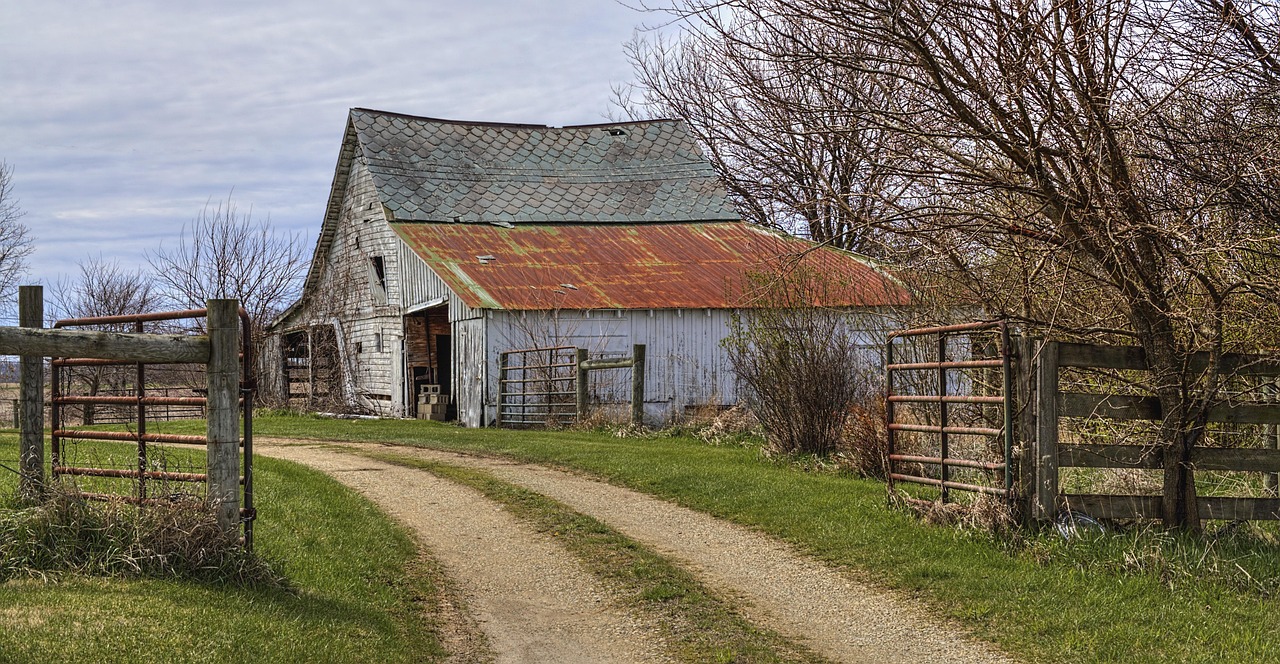
Woodstock anchors central McHenry County, where expansive equestrian homesteads, working farmsteads, and secluded wooded parcels line country roads. Managing long access lanes across rolling glacial topography requires a roadway structure capable of supporting heavy horse trailers, delivery trucks, and snowplow blades without rutting. Constructing a dependable rural gravel driveway Woodstock IL property owners can count on year after year prevents severe vehicle grounding during volatile Midwestern weather transitions. For dependable aggregate transport across McHenry County, visit our Woodstock gravel delivery page.
When approach lanes stretch hundreds of feet to rural residences, asphalt or concrete paving becomes cost prohibitive. A crushed aggregate lane provides exceptional structural strength and drains surface water efficiently when built with sub-base fabric, layered rock lifts, and a center crown. This guide details how to grade glacial soils, select stone aggregates, and shape durable drainage channels.
For rural culvert permitting and right-of-way access standards in McHenry County, consult:
City of Woodstock Department of Public Works (Source)
Why Glacial Moraines Require a Sturdy Rural Gravel Driveway Woodstock IL Design
The rolling terrain around Woodstock is defined by the Marengo and Woodstock glacial moraines, resulting in complex soil profiles featuring dense clay loam subsoils interspersed with sand lenses and damp organic swales. Northern Illinois winters consistently push frost thirty to thirty-six inches deep into uninsulated ground. When early spring thaws arrive, the surface soil softens into slick mud while the deep subgrade remains frozen solid, trapping melting water in the upper roadbed.
Without adequate sub-base depth, heavy agricultural equipment, heating oil haulers, and emergency response vehicles punch directly through the surface stone, creating deep parallel wheel ruts that channel stormwater down the lane. Torrents from severe summer thunderstorms wash out loose uncompacted aggregate, leaving steep gullies and hazardous potholes. Constructing a crowned roadway over heavy geotextile prevents stone from sinking into sticky glacial clay and sheds water immediately into dedicated roadside ditches.
- Engineered structural core and driving surface → road base gravel
- Recycled binding top layer that hardens in summer heat → asphalt millings
- Heavy load-bearing sub-base aggregate for soft clay ground → crushed run
- Large fractured ballast for ditch checks and culvert riprap → breaker run stone
Browse rural driveway materials available in Woodstock
Best Materials for Woodstock Country Lanes
| Roadway layer | Recommended material | Why it works |
|---|---|---|
| Primary foundation | Crushed run | Fractured rock pieces and mineral fines pack into an unyielding bridge over soft clay |
| Main wearing course | Road base gravel | Well-graded limestone fragments bind tightly to shed precipitation and resist tire scour |
| Heat-binding surface | Asphalt millings | Compacted recycled asphalt particles bind together in hot sun to form a dust-free crust |
| Subgrade separator | Woven geotextile | High-tensile synthetic fabric prevents stone loss into clay while allowing drainage |
Combining heavy foundation rock with a tightly packed wearing course ensures rural driveways support heavy axle loads through every season.
Step 1: Stake the Alignment and Clear the Roadbed Corridor
Align your driveway along natural contours to avoid steep slopes where runoff picks up speed. Strip topsoil across a twelve to fourteen-foot corridor, removing dark loam down to firm clay, typically eight to twelve inches deep. Stockpile stripped soil along shoulders to dress swales. Roll the exposed subgrade with a heavy compactor to reveal soft pockets.
Step 2: Shape Flanking Ditches and Lay Heavy Geotextile
Excavate wide, shallow drainage ditches along both sides of the roadway corridor, maintaining ditch bottoms at least twelve inches below the road subgrade. Direct ditch runoff toward natural retention depressions or culverts. Roll out high-strength woven geotextile fabric directly over clay subgrade, overlapping seams by twenty-four inches. This membrane stops crushed rock from sinking into clay while preventing subgrade pumping under heavy trucks. Our road base gravel guide details aggregate compaction specs and gradation profiles.
Property owners managing sprawling country acreages in nearby McHenry rely on this exact ditching and fabric installation sequence to maintain dry access across wet glacial till.
Step 3: Build the Base in Compacted Lifts and Crown the Surface
Spread a six-inch foundation lift of coarse crushed run over the geotextile, shaping a distinct center crown with a half-inch of drop per foot of width toward each shoulder. Compact the stone thoroughly using a ten-ton vibratory roller. Follow with a three to four-inch surface course of road base gravel or asphalt millings. Maintain the center crown through final rolling, ensuring water sheds off the surface rather than pooling in wheel tracks.
Benefits of Local Delivery for Woodstock Driveway Projects
- High-capacity dump trucks deliver large volume loads directly along the road centerline
- Dense regional limestone quarry aggregates resist crumbling under continuous winter traffic
- Substantial freight savings per ton when ordering full tandem loads for long country drives
- Flexible dispatch scheduling coordinates with your heavy grading and rolling equipment
How Much Gravel Will Your Rural Driveway Require?
Accurate material calculations prevent costly project stoppages and ensure your equipment operators keep working smoothly. Measure driveway length and width in feet, multiply by aggregate depth in inches, and divide by 324 to determine total cubic yards. Multiply cubic yards by 1.4 to calculate weight in tons. For example, a 100-foot country approach lane that is 12 feet wide with a 6-inch base layer requires 100 times 12 times 6 divided by 324, equaling 22.22 cubic yards. Multiplying by 1.4 yields 31.11 tons. Adding a twelve percent compaction allowance results in 34.84 tons, indicating you should order 35 tons of base aggregate for each 100-foot road segment.
Frequently Asked Questions
How thick should a rural gravel driveway Woodstock IL foundation be?
Rural driveways supporting agricultural machinery and delivery trucks require eight to ten inches of total compacted stone. A six-inch coarse crushed run base topped with a three to four-inch road base wearing layer provides an ideal structural profile.
Why is building a center crown essential on country lanes?
A center crown forces rain and snowmelt to flow sideways into drainage ditches. A flat roadway allows water to pool in wheel tracks, softening base stone and rapidly generating severe potholes.
Are asphalt millings better than limestone road base?
Asphalt millings offer exceptional dust control and resist washouts on hilly slopes. Limestone road base packs into a tighter, stiffer structural foundation. Many acreage owners combine both, using limestone for the base and millings for the top coat.
How do I prevent snowplows from stripping my gravel in winter?
Set your plow skid shoes one to two inches above the driving surface during early winter storms. Allowing an initial packed snow base to freeze over the aggregate protects loose gravel from being pushed into ditches.
Final Thoughts
Investing in a well-graded, deeply layered gravel driveway provides mud-free vehicular access to your rural home through spring thaws and severe northern Illinois winters. By establishing deep side ditches, laying heavy geotextile underlayment, and compacting angular stone with a solid center crown, you build a durable roadway that stands up to heavy daily traffic. Browse our comprehensive delivery network across Illinois to order top-tier aggregate for your rural property.











