
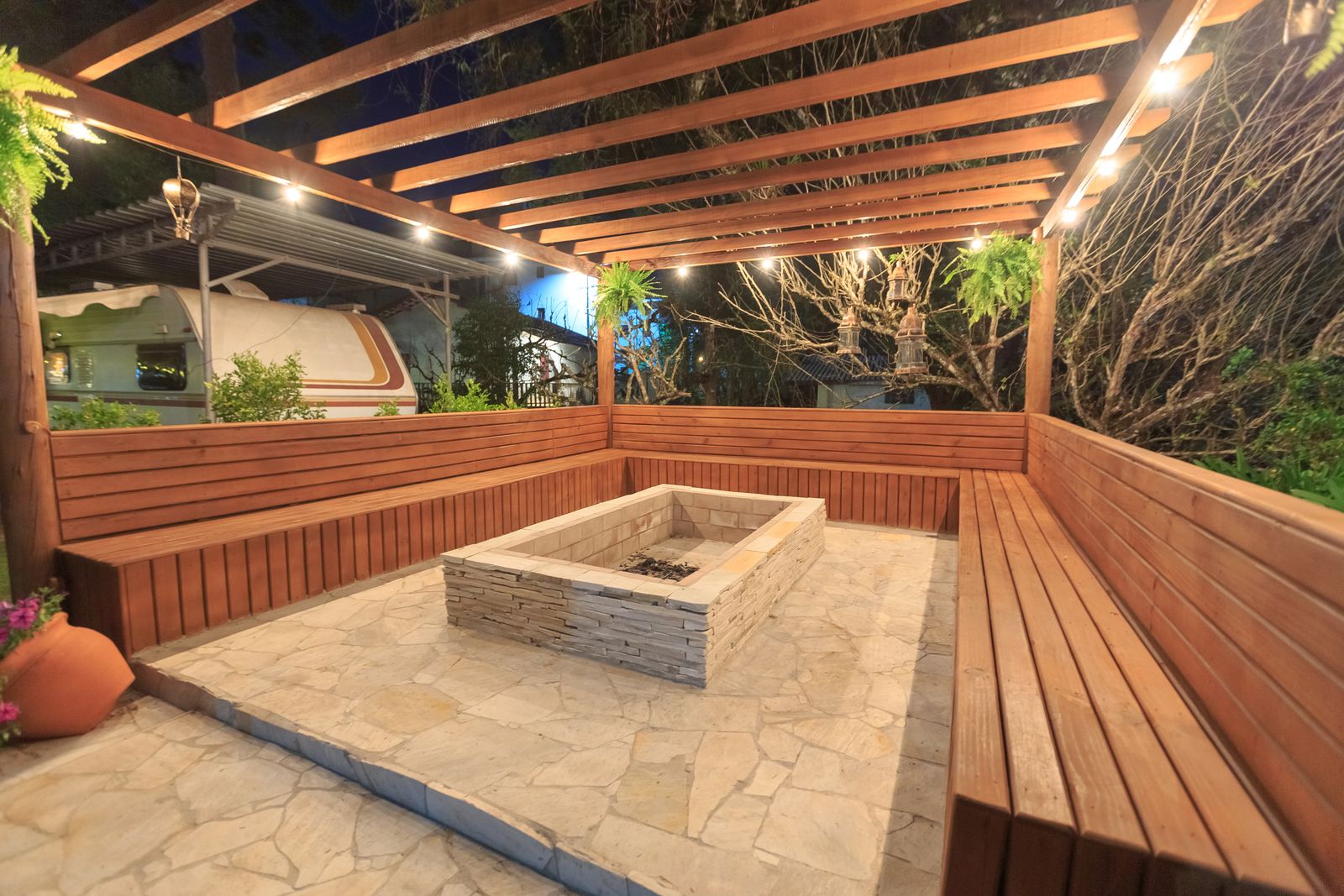
Spring Hill straddles the Johnson and Miami County line, and its growing neighborhoods are full of young families looking to get more use out of their backyards. A fire pit area is one of the most popular weekend projects here. It extends patio season into cool October evenings, gives kids a place to roast marshmallows and costs far less than a deck or a paver patio. A fire pit gravel area in Spring Hill, KS is simple to build if you plan the location and the base carefully. The stone for each layer can be ordered from our Spring Hill delivery page.
For background on fire pit types and safe use, see:
Fire pit (Wikipedia)
Why Gravel Works So Well Around a Fire Pit
Grass around a fire pit gets trampled, scorched by sparks and turns to mud under chairs. Wood decking is a fire risk. Gravel is non-combustible, drains instantly after rain and never needs mowing. It also makes it easy to move chairs around the circle. Spring Hill’s heavy clay soil does not drain well on its own, so a gravel area built over a compacted base keeps the whole space dry and usable right after a storm.
- Seating area surface → pea gravel
- Firm, level base → stone dust
- Leveling sand under the fire ring → mason sand
- Edging the circle → steel edging or set stones
Browse fire pit materials available in Spring Hill
Picking Stone for Each Part of the Fire Pit Area
| Zone | Recommended material | Why it works |
|---|---|---|
| Chair and walking area | Pea gravel | Comfortable underfoot, drains and does not burn |
| Compacted base layer | Stone dust | Tamps flat so the circle stays level |
| Under the fire ring blocks | Mason sand | Fine sand makes leveling the first course easy |
| Inside the pit | Gravel or lava rock | Drains rain so the pit does not hold water |
Choose a Safe Spot
Place the fire pit at least 10 feet from the house, fences, sheds and overhanging branches, and farther if local rules require it. Avoid low spots where water collects. A level area is easiest, but on a gentle slope you can dig into the high side to create a flat pad. Check the City of Spring Hill’s burn rules and any HOA covenants before you start, since some neighborhoods limit open fires or require a screen.
Size the Area Around the Pit
Most backyard fire rings are three to four feet across. Allow at least seven feet from the edge of the pit to the outer edge of the gravel so chairs can sit back comfortably and people can walk behind them. That typically means a circle 16 to 20 feet across. Mark it with a stake and string tied to the center point.
Build the Base
Remove sod and dig down about four inches across the whole circle. Lay landscape fabric, then spread two to three inches of stone dust. Mist it with a hose and compact it with a hand tamper or plate compactor until it is firm. Install edging around the outside so the finished gravel stays in place. Our pea gravel guide covers which sizes feel best underfoot.
Set the Fire Ring
In the center, dig a slightly deeper ring the width of your fire pit blocks. Spread an inch of mason sand, level it carefully, and set the first course of blocks, checking each one with a level. Fill the inside of the pit with a few inches of gravel so rainwater drains. Stack the remaining courses, staggering joints, and add a steel insert if your kit includes one.
Finish the Seating Area
Spread about two inches of pea gravel over the compacted base, keeping it an inch below the edging. Rake it smooth. Add chairs, a small side table and, if you like, low solar lights around the edge. Families in nearby Gardner and Edgerton often add a short gravel path from the patio to the fire pit using the same materials.
Benefits of Local Delivery for Spring Hill Fire Pit Projects
- Base, sand and surface stone arrive together
- Right-sized loads for a single backyard project
- Material dropped where it is easiest to move
- Easy reorders for a matching path later
Calculating the Gravel for a Round Fire Pit Area
For a circle, square the radius, multiply by 3.14, then multiply by the depth in inches and divide by 324. An 18-foot circle has a radius of 9 feet, so its area is about 254 square feet. A 2-inch pea gravel layer over it takes about 1.6 cubic yards, and a 3-inch base takes about 2.4.
FAQ
Is pea gravel safe around a fire pit?
Yes. Gravel will not burn, and it smothers stray embers. Keep the area clear of leaves and other debris.
How far should a fire pit be from the house?
At least 10 feet is a common guideline, but local codes and HOAs may require more. Check before you build.
What goes in the bottom of a fire pit?
A few inches of gravel helps drainage. Avoid river stones from creeks, which can trap moisture and crack when heated.
Can I build this on a slope?
Yes, by cutting into the high side to make a level pad. A low retaining edge on the downhill side holds the gravel in place.
Final Thoughts
A gravel fire pit area is one of the simplest ways to make a Spring Hill backyard more usable from spring through fall. Pick a safe spot, build a compacted base, set the ring carefully and finish with comfortable pea gravel. Planning projects across the region? View every Kansas city we deliver to.











