




The Project in Harrisburg
Harrisburg is one of South Dakota’s fastest-growing communities, attracting families and custom homebuilders to expansive subdivisions just south of Sioux Falls in Lincoln County. As former agricultural land transforms into vibrant residential neighborhoods, new homeowners encounter raw construction subsoils stripped of organic matter. Heavy earthmoving machinery compacts native prairie ground, leaving dense clay pans that turn into sticky mud during spring thaw and bake into hardpan during breezy prairie summers. Completing successful new home landscaping Harrisburg SD projects requires establishing positive surface grading, spreading screened topsoil, and installing rock swales to channel water away from concrete foundations. Sourcing bulk aggregates through reliable Harrisburg gravel delivery ensures you receive the topsoil and decorative rock needed to build flourishing lawns and planting beds.
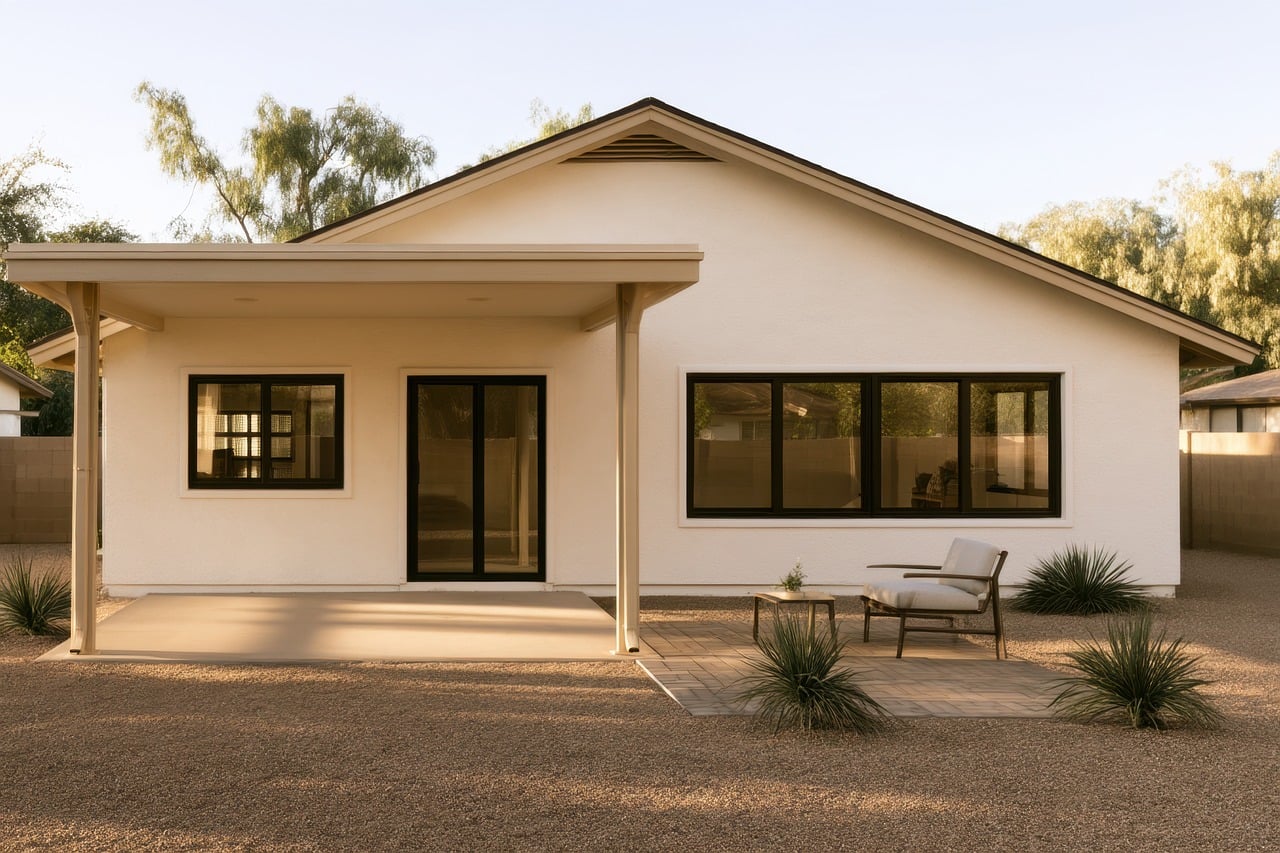
Executing professional new home landscaping Harrisburg SD with premium screened topsoil, shredded bark mulch, and washed #57 stone transforms bare subsoil into an attractive, resilient outdoor living space.
Why Harrisburg’s Soil and Climate Shape This Project
Harrisburg rests upon deep glacial till and loess deposits characterized by Moody, Chancellor, and Egan silty clay loam soil series. These soils contain fine clay platelets that swell when saturated and shrink significantly during summer dry spells. Construction excavation removes the natural topsoil layer, exposing unweathered clay subsoils that exhibit poor percolation and high moisture retention.
In addition, southeastern South Dakota experiences harsh continental weather extremes, including sub-zero winter temperatures, severe ground freezes penetrating forty-two to forty-eight inches deep, and frequent spring thunderstorms. Agronomists at South Dakota State University Extension emphasize that establishing proper yard slope and reintroducing structured loam topsoil are critical steps for residential turf development. Without a minimum two percent positive slope away from home foundations, water pools against concrete basements, inducing hydrostatic pressure and foundation settlement. Incorporating screened topsoil restores root permeability, while clean gravel drainage trenches prevent surface pooling.
Best Soil and Stone Options for Harrisburg Yards
Selecting appropriate materials ensures proper plant growth and effective moisture management across newly built home sites:
- Premium screened topsoil → Finely shredded, rock-free loam rich in decomposed organic matter. It provides a fertile six-inch seedbed for Kentucky bluegrass sod and perennial shrubs.
- Bark mulch → Premium shredded hardwood mulch that conserves vital soil moisture, insulates root zones against summer heat, and prevents weed colonization.
- #57 stone → Clean, washed 3/4-inch angular crushed rock free of sand or dust. It serves as an unyielding filter layer for foundation drip edges and French drains.
Step-by-Step New Home Landscaping Guide
Follow these construction phases to establish durable drainage and turf on prairie soils:
- Decompact subgrade: Rip hard subsoil six inches deep with a scarifier. Grade away from foundations six inches over ten feet. Developers in Tea use laser leveling for slope accuracy.
- Install foundation stone borders: Excavate an eighteen-inch perimeter trench along foundation walls, line with geotextile fabric, and fill with #57 stone. Homeowners in Canton use stone borders to prevent basement dampness.
- Spread screened topsoil: Distribute four to six inches of premium screened topsoil across turf zones. Blend the bottom inch into subsoil to eliminate density barriers.
- Establish beds and bark mulch: Outline planting islands with edging and spread a three-inch layer of shredded bark mulch to protect roots from winds.
- Seed or sod lawn areas: Roll topsoil lightly to firm the seedbed, apply starter fertilizer, and lay drought-tolerant sod.
- Irrigate systematically: Water new sod deeply for three weeks to drive roots deep into native subgrades.
How Much Stone and Soil Do You Need?
Accurate material calculations prevent unexpected delivery delays during short South Dakota planting seasons. Screened topsoil weighs roughly 1.1 to 1.25 tons per cubic yard, while #57 crushed limestone averages 1.4 tons per cubic yard. For a typical suburban yard requiring four inches of topsoil over 4,500 square feet of lawn, you will need approximately 55 cubic yards of topsoil (roughly 65 tons). A foundation drainage perimeter measuring 150 linear feet by 1.5 feet wide and 4 inches deep requires 2.8 cubic yards (4 tons) of #57 stone. Consult our detailed guide to premium screened topsoil for volume conversion formulas and bed preparation tips.
| Material | Project Application | Estimated Coverage per Ton / Yard |
|---|---|---|
| Screened topsoil | 4-inch lawn establishment | 80 to 85 sq ft per cu yd |
| Shredded bark mulch | 3-inch flower bed cover | 100 to 110 sq ft per cu yd |
| #57 clean stone | 4-inch foundation perimeter | 65 to 75 sq ft per ton |
| Drainage pea gravel | 2-inch utility pathway | 90 to 100 sq ft per ton |
Common Mistakes to Avoid in Harrisburg
Laying sod directly over compacted clay subsoil without screened topsoil causes shallow rooting, drought stress, and turf dieback. Investing in structured new home landscaping Harrisburg SD preparation with deep topsoil ensures lasting lawn health.
Avoid using light pea gravel or unedged wood chips near drip lines, as prairie winds scatter light mulches. Never flatten platted drainage swales between residential properties, which causes neighbor flooding.
Local Sourcing, Permitting, and Delivery in Harrisburg
Residential landscaping on private property in Harrisburg does not require building permits, provided retaining walls remain under four feet and platted drainage easements are preserved. Always call South Dakota 811 before digging.
When purchasing bulk materials, work with experienced South Dakota landscape stone and topsoil distributors. Heavy dump trucks require firm access paths. Schedule drop-offs onto plywood-protected driveways through our dedicated gravel delivery Harrisburg dispatch team.
Frequently Asked Questions
How deep should screened topsoil be for new lawns in Harrisburg?
Spread a minimum of four to six inches of screened topsoil over loosened subgrade clay to ensure deep root penetration and drought tolerance for Kentucky bluegrass.
Why should I use #57 stone around home foundations?
Washed #57 stone creates an unyielding drainage border that channels roof runoff away from basements, eliminates muddy splash marks on siding, and deters pests.
When is the best time of year to landscape a new home in Harrisburg?
Late spring (May to early June) and late summer (mid-August to mid-September) are optimal times for lawn seeding and topsoil application before winter frosts occur.
How does bark mulch protect plants from South Dakota winds?
A three-inch layer of shredded bark mulch knits together against prairie gusts, shades soil surfaces, minimizes evaporation, and buffers roots against rapid freeze-thaw cycles.
Related Resources
- Premium screened topsoil for leveling, sodding, and garden beds
- Shredded hardwood bark mulch for moisture retention and weed control
- Washed #57 clean stone for foundation drainage and French drain trenches
- Complete material guide to topsoil selection, grading, and lawn prep
Final Thoughts
Transforming a new build into a thriving yard takes thoughtful grading and quality materials. By decompacting prairie clay, spreading rich topsoil, and installing clean stone borders, your lawn will thrive through hot summers and frozen winters. Quality new home landscaping Harrisburg SD supplies ensure lasting performance. Explore our complete selection of Harrisburg gravel and landscape materials. Contact Simple Gravel today to calculate your materials and schedule delivery.











