
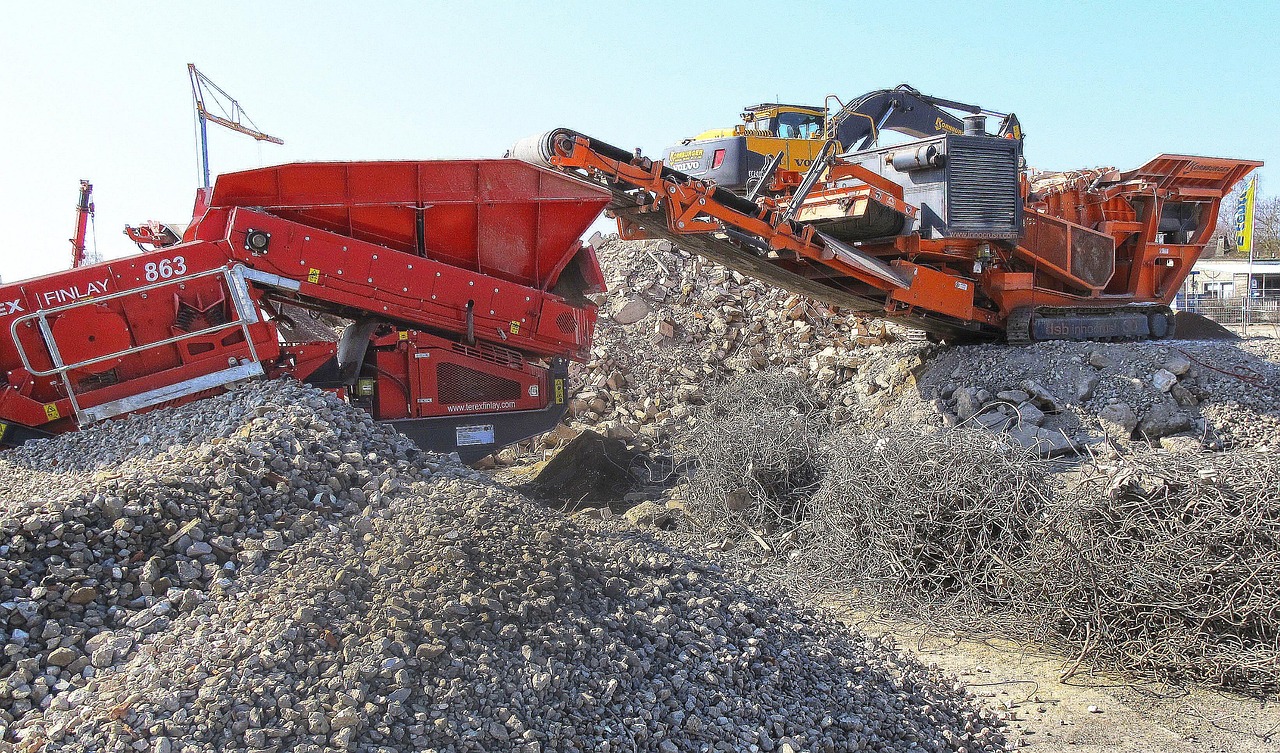
Managing private driveways, utility turnaround pads, and rural access lanes across Madison County requires choosing surfacing aggregates that endure changing midwestern weather. In Anderson, parcels along Rangeline Road, near Scatterfield Road, and throughout residential acreage bordering the White River manage heavy daily pickup and service truck traffic. When planning roadway surfacing or structural sub-base installation, evaluating crushed concrete vs crushed run Anderson IN property owners compare helps determine the most durable and cost-effective material. Both aggregates provide dependable structural support, but their compaction mechanisms, aesthetics, and long-term maintenance profiles differ significantly. Homeowners can browse local aggregates on our Anderson gravel delivery page to choose surfacing materials suited for regional ground conditions.
Choosing between recycled concrete aggregate and virgin limestone crushed run requires balancing material budget, compaction rigidity, and grading flexibility. Understanding how each material performs under Indiana freeze-thaw cycles ensures your driveway remains firm and rut-free year after year.
To inspect regional geological surveys, soil classifications, and infrastructure specifications across Madison County, visit:
Anderson Geography and Transportation (Wikipedia)
Why Madison County Soils Demand the Right Driveway Aggregate in Anderson
Anderson rests on glacial till plains characterized by Crosby and Miami silt loam soils overlying dense limestone formations. Native central Indiana soils have high silt and clay fractions that absorb spring rain and snowmelt, turning soft and spongy under vehicle tires. When vehicle traffic traverses unpaved roads lacking a dense structural aggregate foundation, tires easily punch ruts into the soft subgrade, churning mud upward through loose surface gravel. Furthermore, Anderson building codes calculate winter frost lines down to thirty inches, causing repeated freeze-thaw surface heaving.
Weighing crushed concrete vs crushed run Anderson IN driveways require comes down to compaction chemistry. Recycled concrete contains unhydrated cement dust that re-crystallizes when compacted with water, forming a rigid, semi-paved sub-base. Virgin limestone crushed run mechanically interlocks under heavy rolling, creating an unyielding stone platform that sheds water while remaining easy to reshape with a tractor blade.
- Economical recycled foundation aggregate → crushed concrete
- Classic interlocking virgin limestone base → crushed run
- Heavy load-bearing road base stone → road base gravel
- Roadside ditch drainage rock → 3/4″ clean gravel
Browse driveway aggregates available in Anderson
Best Materials: Crushed Concrete vs. Crushed Run
Comparing recycled concrete against virgin limestone crushed run reveals crucial performance distinctions for residential driveways.
| Driveway Feature | Recycled Crushed Concrete | Virgin Crushed Run (Limestone) |
|---|---|---|
| Compaction Mechanism | Unhydrated cement fines re-crystallize with moisture to form a rigid, slab-like surface. | Sharp angular limestone facets interlock with stone dust fines under heavy rolling. |
| Material Cost | More economical; recycled sourcing reduces raw quarry extraction and crushing costs. | Standard pricing; premium virgin limestone provides clean, uniform particle grading. |
| Visual Appearance | Muted light gray; utilitarian look best for heavy sub-bases or rural utility lanes. | Attractive beige or cream limestone; provides classic, clean curb appeal. |
| Re-grading Ease | Difficult to blade once hardened; requires scarifier shanks to reshape potholes. | Straightforward to re-grade, crown, and maintain with standard tractor rear blades. |
Subgrade Preparation and Excavation Steps
Regardless of which aggregate you choose, driveway longevity depends entirely on subgrade excavation. Excavate five to eight inches of organic topsoil down to firm mineral clay. Shape the bare dirt subgrade with a distinct three percent center crown so water filtering through aggregate continues moving outward toward roadside ditches. Similar subgrade stabilization methods protect residential driveways in Avon, where heavy glacial loam requires positive drainage slopes.
Install heavy non-woven geotextile fabric across the excavated clay subgrade before placing stone. Geotextile fabric acts as a permanent barrier that stops heavy aggregate from sinking into soft subsoil clay during wet spring thaws while preventing native mud from contaminating your road base.
Spreading, Compacting, and Capping Driveways
When installing crushed concrete, spread a four-to-six-inch layer across the geotextile fabric. Moisten the recycled aggregate thoroughly with a hose before compacting with a heavy vibratory roller; water activates unhydrated cement dust, locking the pieces into a rigid conglomerate. Read our comprehensive crushed concrete guide to master recycled aggregate compaction.
If installing virgin crushed run, grade the material with an intentional center crown of half an inch per horizontal foot. Roll the damp stone until the steel drum makes no indentations in the surface. Evaluating crushed concrete vs crushed run Anderson IN installations proves that both materials deliver exceptional service when compacted properly over geotextile fabric.
Benefits of Local Delivery for Anderson Driveway Projects
- Bulk dump truck deliveries place heavy stone tonnages directly along your driveway corridor.
- Eliminates dozens of exhausting trips hauling heavy, broken bags from big-box home improvement stores.
- Recycled concrete aggregate arrives screened and magnetically cleared of rebar scrap and foreign debris.
- Scheduled deliveries allow equipment operators to dig, fill, and compact without costly delays.
How Much Aggregate Will You Need for Your Driveway?
Calculating material volume for a crushed concrete vs crushed run Anderson IN project follows standard cubic yard geometry. Multiply driveway length in feet by width in feet, multiply by stone depth in inches, and divide by 324 to establish cubic yards. Both crushed concrete and crushed run weigh approximately 1.4 tons per cubic yard.
For example, imagine surfacing a driveway measuring 150 feet in length and 12 feet in width (1,800 square feet) with a 5-inch compacted base course. Multiply 1,800 by 5 inches to get 9,000, and divide by 324 to calculate 27.78 cubic yards. Multiplying 27.78 by 1.4 tons indicates you will need approximately 38.9 tons of aggregate.
Frequently Asked Questions
Does crushed concrete track dust into the house?
Freshly crushed concrete can produce minor dust initially, but once moistened, compacted, and cured under vehicle traffic, surface dusting stops.
Can I pour fresh asphalt or concrete over a crushed run base?
Yes, thoroughly compacted crushed run limestone provides an outstanding structural foundation for future asphalt or poured concrete paving.
Will crushed concrete harm surrounding lawn grass?
Crushed concrete has a mildly alkaline pH; avoid placing it directly against acid-loving ornamental shrubs like hydrangeas and azaleas.
How thick should a driveway gravel base be for heavy delivery trucks?
Rural entryways supporting delivery trucks and farm equipment require a minimum of six to eight inches of compacted aggregate over geotextile fabric.
Final Thoughts
Both crushed concrete and virgin crushed run provide tough, dependable surfacing solutions for Anderson driveways when installed over a properly prepared subgrade. Recycled crushed concrete offers exceptional economy and re-cements into a stone slab, while crushed run delivers classic limestone curb appeal and straightforward maintenance. Find your Indiana delivery area here to explore bulk driveway aggregates delivered directly to your property.











