
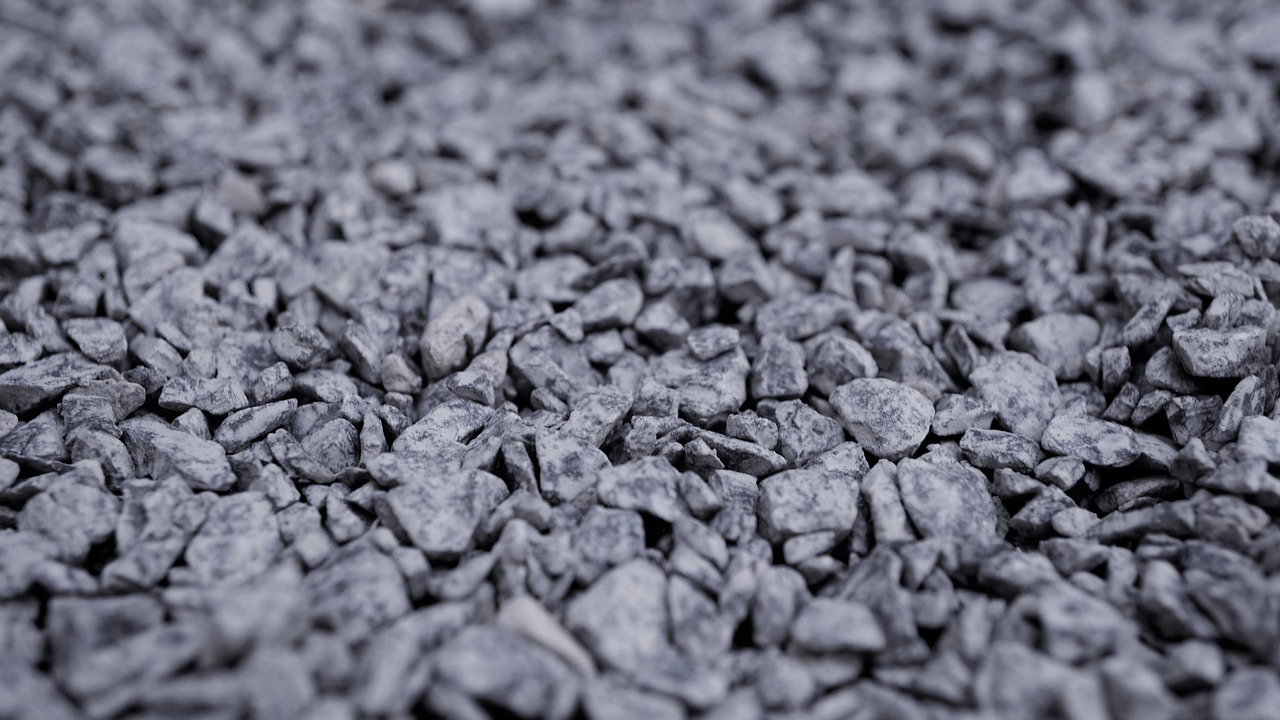
Navigating the standard crushed aggregate sizing system across Florida requires consulting an authoritative Florida stone size guide to match quarry screening numbers with specific drainage and paving applications. Whether excavating a foundation French drain around a concrete slab, constructing a long rural access road, or laying decorative pathways through subtropical gardens, using the wrong gravel size leads to sinking vehicle tires or clogged drainage pipes. In Florida, commercial quarries classify crushed stone and limestone according to standard ASTM and Florida Department of Transportation sieve designations rather than subjective names. Sourcing materials using a clear Florida stone size guide ensures homeowners, landscapers, and general contractors match load-bearing capacity and hydraulic flow needs to the exact right aggregate gradation. Property owners can schedule rapid bulk deliveries through our Florida aggregate delivery page to secure coarse #4 ballast, clean #67 stone, and fine #11 chips direct to their jobsite.
Understanding standard crushed aggregate sizing numbers guarantees proper drainage void ratios, eliminates vehicle tire rutting, and ensures long-lasting hardscape durability.
To inspect Florida Department of Transportation standard aggregate specifications, quarry testing protocols, and ASTM sieve classification benchmarks, check:
Crushed Stone Gradation and Sieve Number Standards (Wikipedia)
Why Sieve Numbers Govern Florida Stone Size Guide Selection
Crushed stone numbering can feel counter-intuitive to property owners because the sizing scale is inverse: smaller numbers designate large ballast stone, while larger numbers designate fine gravel chips. For example, heavy #4 stone measures nearly two inches in diameter, while fine #11 stone measures less than three-eighths of an inch. Following an accurate Florida stone size guide prevents costly installation mistakes, such as placing fine chips in deep French drains where they wash into pipe perforations, or spreading massive ballast rock across pedestrian walkways.
Coarse #4 crushed stone provides heavy stabilization ballast that bridges soft, saturated sandy ground along construction entrances and farm lanes. Mid-sized #67 crushed stone delivers an optimal blend of three-quarter to one-half inch fractured stone, providing a firm driving surface that interlocks under tires without shifting. Fine #11 stone chips create a smooth, packable top dressing for pedestrian paths and decorative succulent beds. In fast-growing residential communities like Lehigh Acres and coastal barrier cities near Sunny Isles Beach, selecting the proper stone size ensures exterior hardscapes perform reliably.
- Heavy foundation stabilization and sub-base ballast → #4 crushed stone
- Standard mud-free driveway and parking gravel → #67 crushed stone
- Fine decorative bedding and walkway top dressing → #11 crushed stone
- Compacting road foundation base material → Crushed run
Comparing Popular Florida Crushed Stone Gradations
Refer to this technical sizing breakdown to choose the correct aggregate diameter and void structure for your project.
| Crushed Stone Grade | Nominal Particle Sizing | Primary Engineering Application |
|---|---|---|
| #4 Crushed Stone | 1 1/2″ to 2 1/2″ Angular | Subgrade stabilization over soft sand, muddy site entrances, and gully check dams. |
| #67 Crushed Stone | 1/2″ to 3/4″ Angular Clean | Surface driving courses, foundation French drains, and retaining wall backfill. |
| #11 Crushed Stone | 1/8″ to 3/8″ Fine Angular | Pedestrian garden pathways, decorative succulent beds, and permeable paver joint infill. |
| 3/4″ Minus Crushed Run | 3/4″ Down to Stone Dust | Compacted driveway roadbeds, shed foundation pads, and paver sub-base courses. |
Matching Stone Diameters to Drainage and Driveway Projects
When engineering residential drainage systems, open void space between individual rocks is the primary design factor. Clean crushed stone grades like #4 and #67 are washed thoroughly during quarry screening to eliminate all mineral fines. This leaves forty percent internal void space, allowing groundwater to flow rapidly through French drains and dry wells without clogging.
Conversely, driveway surfaces require a blend of angular stones that lock together under moving tire traffic. Spreading clean #67 stone over a compacted base provides excellent tire traction while shedding summer rain into side drainage swales. Check our comprehensive #4 crushed stone material guide for specialized ballast bridging depths and subgrade geotextile installation techniques.
Choosing Decorative Stone Chips for Walkways and Planters
For pedestrian areas, fire pit surrounds, and courtyard gardens, smaller stone sizes offer superior comfort underfoot. Fine #11 stone chips pack together into a stable, crunch-free walking surface that does not shift or roll under shoes like rounded river gravel.
In central rolling hills communities like Groveland, light-colored #11 stone chips serve as an attractive ground cover that reflects intense solar heat, shades plant roots, and stays firmly in place during summer downpours.
Benefits of Bulk Aggregate Delivery Across Florida
- Quarry haulers deliver massive multi-ton loads of certified crushed stone right to your jobsite.
- Drastically reduces material costs compared to purchasing small bags from retail home centers.
- Guarantees consistent quarry screening that adheres strictly to ASTM and state standards.
- Skilled drivers drop stone accurately along driveways or pad boundaries to speed project workflow.
Calculating Crushed Stone Quantities by Sieve Size
Accurate material calculation prevents shortages or costly over-ordering on bulk stone deliveries. Multiply project length in feet by width in feet to calculate total square footage. Multiply square footage by planned stone depth in inches, then divide by 324 to establish cubic yards. Crushed stone weighs approximately 1.4 tons per cubic yard.
For example, if resurfacing a 600-square-foot driveway with a 3-inch layer of #67 crushed stone: Multiply 600 by 3 to get 1,800. Divide 1,800 by 324 to find 5.56 cubic yards. Multiply 5.56 cubic yards by 1.4 tons per cubic yard to determine 7.78 tons. Ordering eight tons provides full coverage with extra material for perimeter grading.
Frequently Asked Questions
What is the most common gravel size for residential driveways?
The standard size for residential driveways is #67 or #57 crushed stone (one-half to three-quarter inch), which compacts well and resists rutting.
Can I use #4 crushed stone as a finished driveway surface?
No, #4 stone is too coarse and rough for vehicle tires; use it only as a buried sub-base beneath a finer driving course.
What is the difference between clean stone and crushed run?
Clean stone contains only uniform gravel pieces with open voids, while crushed run includes fine stone dust that compacts into a solid pavement.
What stone size works best in permeable paver joints?
Fine #11 crushed stone chips flow easily into narrow paver joints, locking interlocking blocks securely without washing away.
Final Thoughts
Selecting the ideal crushed stone size transforms the functionality, longevity, and visual appeal of exterior property improvements. By consulting this Florida stone size guide, you can confidently match coarse #4 ballast, mid-sized #67 driving gravel, and fine #11 walkway stone to your exact project needs. Find your Florida delivery area here to schedule bulk delivery of quarry-certified crushed stone directly to your driveway or jobsite.











