




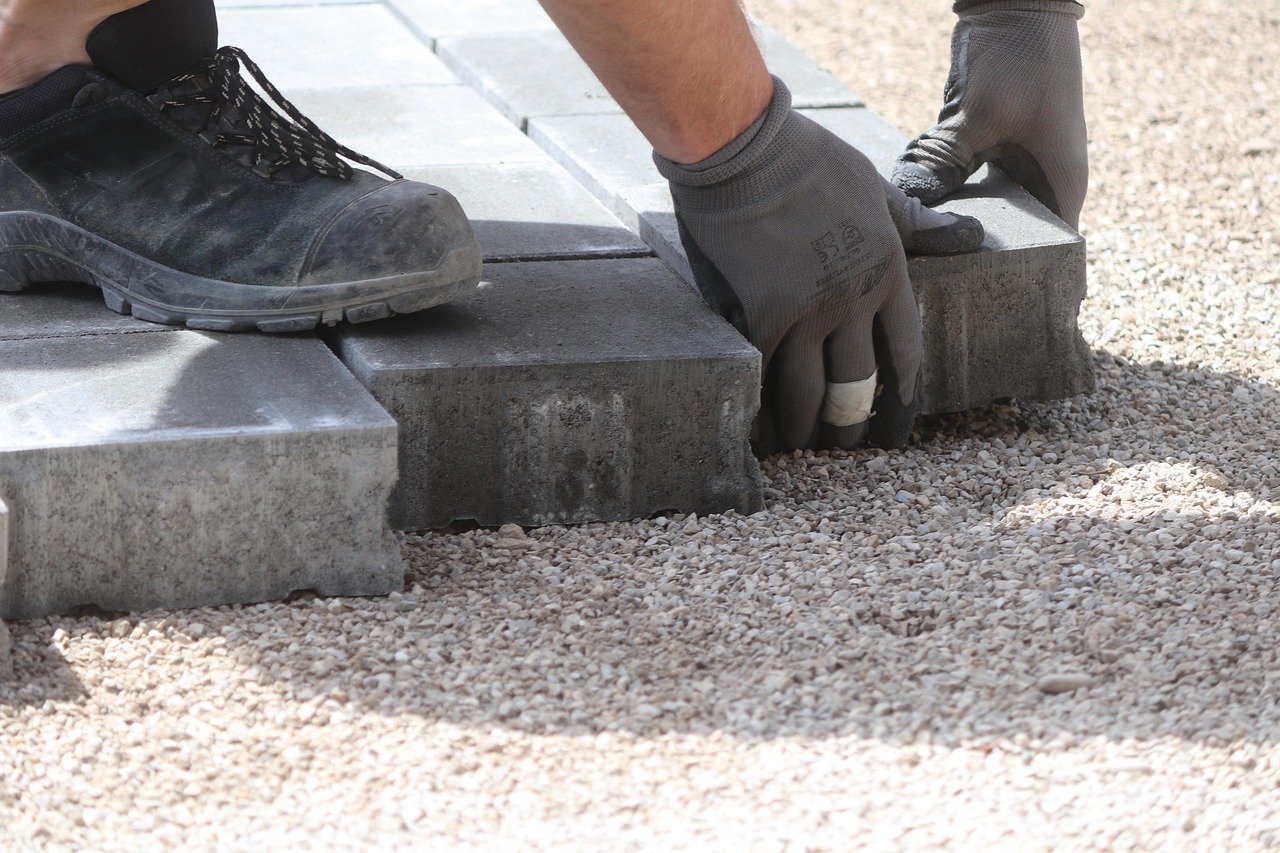
Constructing a durable interlocking concrete paver patio or walkway in Greenfield requires building an engineered aggregate sub-base that withstands extreme winter ground movement. In southwestern Milwaukee County near I-894 and Highway 100, properties in Greenfield contend with Oak Creek Formation clayey glacial till over Silurian dolomite bedrock. Southeastern Wisconsin winters bring frost lines forty-eight inches deep, followed by spring thaws that turn clay subgrades into soft mud. Laying pavers over an uncompacted gravel base leads to tipping, sunken tracks, and tripping hazards. Sourcing certified paver base Greenfield WI contractors recommend provides an unyielding, free-draining platform that protects your outdoor living space from frost heave. Property owners can schedule rapid bulk delivery through our Greenfield aggregate delivery page to secure dense base rock and sharp bedding sand.
An engineered aggregate paver sub-base prevents winter frost heave, eliminates sunken patio pavers, and provides rapid subgrade drainage under outdoor living spaces.
To inspect Milwaukee County Oak Creek glacial till geology, Silurian dolomite bedrock, and local residential patio building standards, check:
Geography and Soil Characteristics of Greenfield, Wisconsin (Wikipedia)
Why Clay Till Demands a Paver Base Greenfield WI
Dense clayey glacial till in Greenfield holds moisture tenaciously, swelling during freeze cycles and losing shear strength when thawing. When heavy foot traffic or patio furniture presses down on pavers set over unstable subsoil, individual units sink unevenly into muddy spots. Installing an engineered paver base Greenfield WI landscape builders install creates a thick, non-frost-susceptible aggregate crust that distributes surface loads evenly.
Compacted 3/4-inch minus base gravel incorporates sharp crushed stone chips and fine mineral dust that interlock under heavy compaction into a rock-hard layer. Screeding a uniform one-inch bed of coarse concrete sand over the compacted base allows pavers to seat securely without sinking. For projects in adjacent Milwaukee County communities, check our West Allis aggregate delivery options for reliable project materials.
- High-density compaction foundation base → 3/4″ minus base gravel
- Sharp coarse bedding sand for pavers → Concrete sand
- Fine firm-setting screening grit → Stone dust
- Subgrade perimeter drainage rock → 3/4″ clean gravel
Explore paver base aggregates in Greenfield today
Recommended Material Courses for Paver Patios and Walks
Combining heavy-duty geotextile fabric with compacted base gravel and sharp bedding sand ensures a flat, non-settling paver surface.
| Pavement Course | Recommended Aggregate | Structural Function |
|---|---|---|
| Compacted Foundation Core (6″ to 8″) | 3/4″ Minus Base Gravel | Sharp crushed stone and fine rock dust pack rock-hard to bridge soft native clay and prevent frost settling. |
| Paver Setting Screed Bed (1″) | Concrete Sand (Coarse Washed Silica) | Sharp, angular sand particles do not wash out and provide uniform seating for concrete pavers. |
| Paver Joint Infill Grit | Polymeric Sand or Fine Stone Dust | Locks paver units tightly together, absorbs horizontal shear stress, and prevents weed germination. |
| Subgrade Perimeter Drainage Trench | #57 Stone (3/4″ Clean Washed) | Surrounds patio perimeter to route heavy roof runoff and meltwater away from the base pad. |
Excavating and Underlayment Prep in Greenfield
Stake out your proposed patio or walkway footprint, adding six inches of extra clearance beyond the finished paver edge to secure edge restraints. Excavate the sod and topsoil to a uniform depth of eight to ten inches below finished paver elevation. Establish a subtle one-quarter inch per foot slope away from home foundations to ensure positive surface runoff. Tamp the native clay subgrade thoroughly with a heavy vibrating plate compactor.
Line the entire excavated footprint with commercial non-woven geotextile fabric, extending fabric edges up the excavation sidewalls. In Greenfield, this geotextile layer is essential; it stops dense Oak Creek clay till from churning into the crushed gravel base while permitting rainwater to percolate downward naturally into the subsoil profile.
Compacting the Base and Screeding the Sand Bed
Spread 3/4-inch minus base gravel in two- to three-inch lifts over the geotextile fabric. Lightly spray each layer with water to achieve optimum compaction density, then run a vibratory plate compactor over the pad in overlapping passes. Build the base to a minimum compacted thickness of six inches for pedestrian patios or eight inches for vehicular driveways. Review our comprehensive 3/4-inch minus base gravel material guide for density curves and compaction metrics.
Set one-inch outside diameter conduit pipes across the compacted base as screed rails. Spread coarse washed concrete sand over the gravel, striking it smooth with a straight screed board. Do not compact the bedding sand before laying pavers. Set pavers directly onto the screeded sand bed, install rigid plastic edge restraints anchored with ten-inch spikes, and tamp pavers into the sand with a padded plate compactor.
Benefits of Bulk Aggregate Delivery in Greenfield
- Dump truck delivery drops multiple tons of base gravel and bedding sand directly beside your patio formwork.
- Dramatically more cost-effective per ton than buying individual bags from retail home centers.
- Quarry-direct crushed limestone guarantees consistent gradation and high compressive strength.
- Professional drivers navigate residential avenues near I-894 and Highway 100 safely.
Calculating Aggregate Quantities for Paver Subgrades
Accurate material calculation prevents project interruptions when ordering paver base Greenfield WI supplies. Measure the length and width of your patio area in feet (including edge restraint clearance) to find square footage. Multiply square footage by aggregate base depth in inches, and divide by 324 to determine total cubic yards. Dense crushed base gravel and washed concrete sand weigh approximately 1.4 tons per cubic yard.
For example, if you are building an 18-foot by 20-foot paver patio (360 square feet) with a 6-inch base layer and a 1-inch bedding layer (7 inches total aggregate), multiply 360 by 7 to get 2,520. Divide 2,520 by 324 to find 7.78 cubic yards. Multiplying 7.78 cubic yards by 1.4 tons indicates that you will need approximately 10.9 tons of bulk aggregate (approx. 9.3 tons of base gravel and 1.6 tons of concrete sand).
Frequently Asked Questions
How thick should a gravel base be under a paver patio in Greenfield?
A paver patio requires a minimum compacted base of six inches of 3/4-inch minus base gravel topped with one inch of concrete sand to resist frost heave.
Why is concrete sand preferred over stone dust for paver bedding?
Concrete sand has coarse, angular silica grains that do not wash away under heavy rain, whereas fine stone dust can hold moisture and freeze unevenly.
Can I install pavers directly on native Greenfield soil?
No, native clay till expands when frozen and softens when wet, which quickly causes unsupported pavers to sink, tip, and separate.
Do I need edge restraints on a paver patio?
Yes, rigid edge restraints spiked into the gravel base are essential to prevent perimeter pavers from sliding outward under foot traffic.
Final Thoughts
Building a long-lasting paver patio in Greenfield requires careful subgrade excavation and an engineered gravel foundation. By installing heavy geotextile fabric beneath compacted 3/4-inch minus base gravel and screeding with sharp concrete sand, you establish an unyielding platform that prevents winter frost heave and keeps your patio beautiful for decades. Find your Wisconsin delivery area here to schedule bulk delivery of paver base gravel and bedding sand straight to your home.











